
The Designer – Beating Heart of the Buildings of the Future
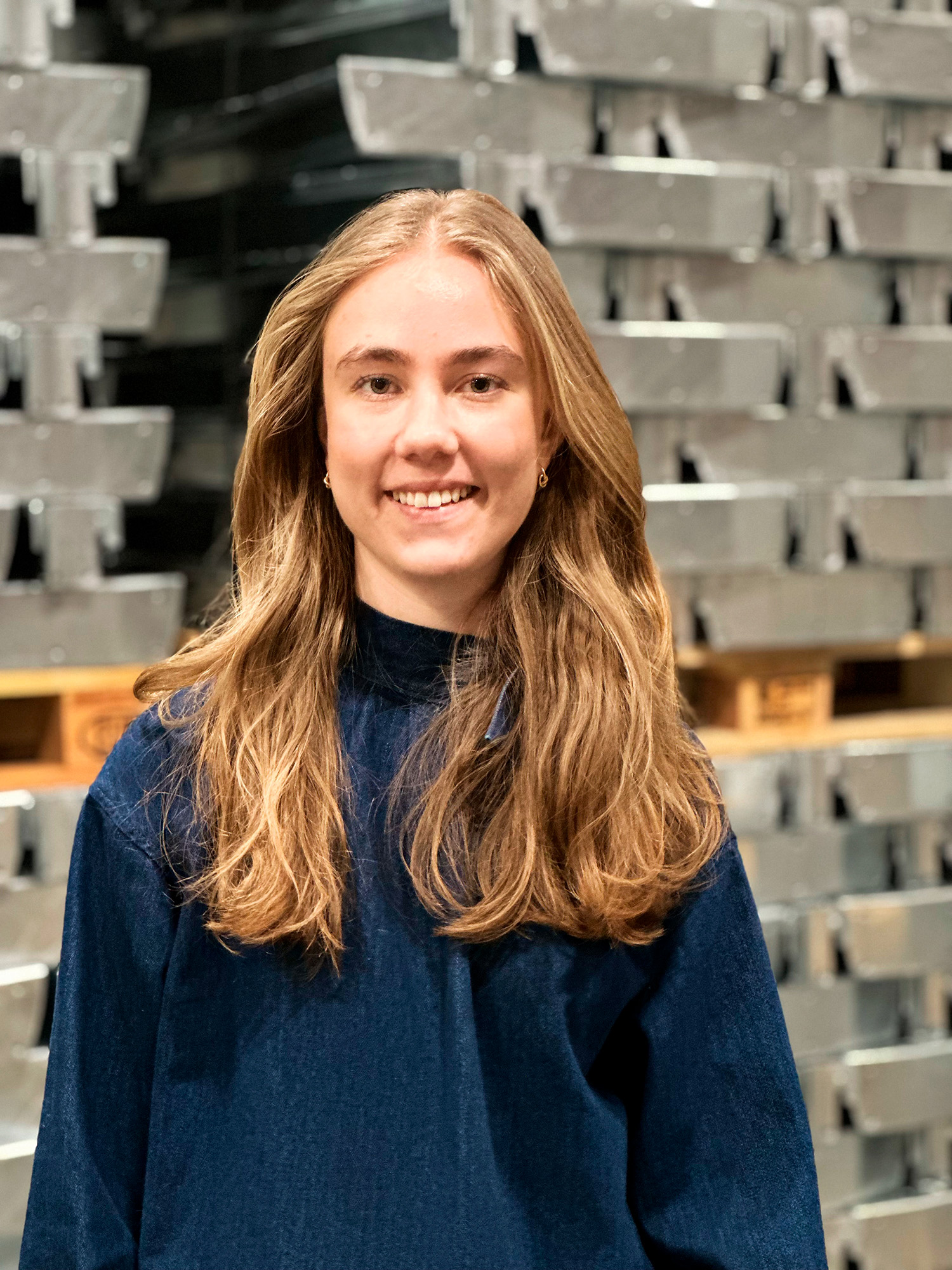
Making conscious choices when picking materials for use in our building projects gives us enormous scope to reduce our climate impact. Vendela Lönkvist is one of a group of young designers at Weland who have been trained to see the entire chain of a building’s life cycle. Many crucial decisions can be made during the design phase, and it is here that the designer plays a pivotal role.
Lönkvist is a recent graduate of Chalmers University of Technology, joining us as a qualified civil engineer focusing on social building technology with a Masters in Industrial Ecology. For her, life cycle analyses (LCA), is not a new concept but rather a natural tool in design work. She brings a clear perspective from her studies: construction projects need to be viewed as a complex system where every technical choice affects the whole. A life cycle analysis should be regarded as a way of supporting decisions early on in the process, not as a method of reporting after the fact.
– For me, it’s about combining technical engineering know-how with a systematic approach. Building smart for today, but also planning for long-term use, maintenance, and re-use, says Lönkvist.
Consequences over time
Construction projects are often assessed based on what is immediately visible – budget, schedules, and technical function. But there are also consequences that have a greater impact on society over time. These include increased poor health due to pollution, diminished biodiversity, and climate change. Such potential effects are rarely caught as they often emerge much later and do not impact those making decisions in the here and now. According to Lönkvist, a common misconception in the industry is that adopting a circular approach to construction means higher costs or the development of advanced custom solutions.
– It’s not about compromising on standards or safety, but rather shifting focus from the lowest purchase price to what has the least impact over time.Robust solutions that have a long service life deliver better results than solutions that are designed solely because they require lower initial material outlay.
Hot dip galvanized steel
Hot dip galvanized steel is an excellent example of a robust material that meshes perfectly with this circular approach. At Weland, hot dip galvanizing is a fundamental part of the manufacturing process for our staircases, railings, ramps, and gratings. Steel and zinc can be recycled again and again without compromising quality or strength. This means that the material can be melted down and used to make new steel and new structures. But Lönkvist also sees huge potential in re-use.
– Instead of always producing virgin material, I believe that there is enormous scope to re-use what already exists. This can be achieved by taking a more modular approach to design, giving thought to dimensions, attachments, and the production of clear documentation.
Digital Product Passports
The construction industry is facing a new way of working with transparency and traceability, and this will soon be augmented by the roll-out of the EU Digital Product Passport. This is a digital document for building products where information about materials, production, climate impact, maintenance, and removal is collected in one place. In the case of spiral staircases made from hot dip galvanized steel, a product passport can cover multiple life cycles and act as a guarantee of safety and functionality when the product is re-used.
– From a circular perspective, it’s not about producing completely new products, but rather developing systems that take into account what already exists. And it’s here I believe that the construction industry has a great opportunity going forwards, concludes Lönkvist.
Published: 2026-02-09